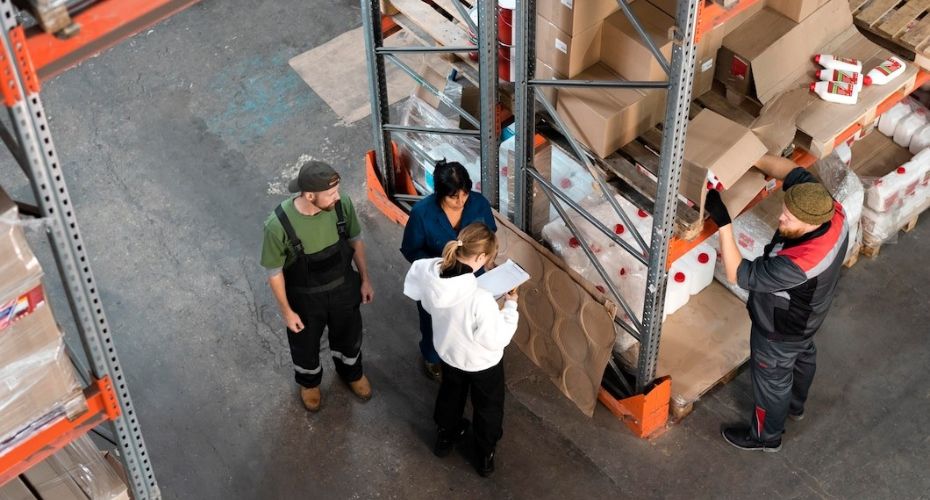
Efficiency starts long before a single package hits the shipping dock. Most facilities struggle with congestion because their original design didn’t account for today’s rapid order cycles. We see warehouses where pickers spend sixty percent of their shift just walking between aisles. That wasted movement is a direct drain on your bottom line and kills your fulfillment speed. Our team at JEC Consulting Services approaches every floor plan as a puzzle where every inch must serve a purpose. We believe that a well-organized layout acts as the foundation for every other success in your building. Utilizing professional Warehouse Layout Consulting Services allows you to see your space through the eyes of an efficiency expert rather than just a storage manager.
Strategic planning turns a cluttered storage room into a high-velocity fulfillment engine. We look for ways to minimize travel distance while maximizing the use of vertical air rights. Your fastest-moving items should always be the easiest to reach. When we reconfigure a space, we focus on creating “high-velocity zones” that keep your team focused on picking rather than searching. This shift in perspective transforms the daily grind into a streamlined process. You shouldn’t have to fight your building to get orders out the door on time.
The Logic Behind Smart Floor Planning
Every successful operation relies on a logical flow that prevents cross-traffic and bottlenecks. We analyze how goods enter the building and where they reside before they leave. Poorly placed receiving docks often lead to a pile-up of pallets that blocks the very lanes pickers need to access. We at JEC Consulting Services look at these touchpoints to ensure that inbound and outbound processes never compete for the same floor space. Our goal is a linear or U-shaped flow that keeps products moving in one direction.
Optimizing a layout involves more than just moving racks around. We dive into your SKU velocity data to determine exactly where products should live. High-demand items belong at chest height and near the shipping area. Slow-moving stock can move to higher levels or the back of the facility. This “slotting” strategy is a core part of our warehouse layout optimization services. We help you categorize inventory so that your team makes fewer mistakes and moves faster. A facility that makes sense to the human eye is a facility that runs with fewer errors and higher morale.
Leveraging Local Expertise for Georgia Logistics
Operating a distribution hub in the Southeast requires a specific type of agility. We provide specialized warehouse consulting in Atlanta because we recognize the unique demands of this massive logistics corridor. The sheer volume of freight moving through this region means your facility must be prepared for rapid scaling. We help local businesses adapt their existing footprints to handle the seasonal surges common in our regional economy.
Our local presence allows us to visit your site and see the physical constraints firsthand. We don’t just send you a digital drawing; we walk the floor with your leads to hear their daily frustrations. Someone who spends eight hours a day in an aisle knows better than anyone where the “clog” is. We combine that boots-on-the-ground feedback with our engineering expertise to create a plan that actually works in practice. This personalized approach ensures your new layout supports your specific business goals.
Maximizing Vertical Cube and Storage Density
Running out of floor space is a common reason companies look for a new building. However, many facilities are only using half of their actual volume. We look upward to find hidden capacity that can save you from a costly relocation. Installing the right racking systems or mezzanine levels can double your storage without adding a single square foot to your lease. We at JEC Consulting Services evaluate your slab strength and ceiling heights to find these opportunities.
Selective Racking Upgrades: Using teardrop or structural racks that allow for higher stacking and better accessibility.
Narrow Aisle Configurations: Reducing aisle widths to add more storage rows while using specialized equipment for picking.
Mezzanine Integration: Adding a second level for packing stations or returns processing to keep the main floor clear for heavy pallets.
Gravity Flow Systems: Utilizing racks that use rollers to move product forward, ensuring perfect first-in-first-out (FIFO) rotation.
Streamlining the Pack and Ship Process
The final stage of fulfillment is often where things go wrong. If your packing tables are cluttered or far from the shipping doors, you lose precious minutes on every order. We redesign these areas to put every tool, box, and label within arm’s reach of the operator. A “lean” packing station reduces fatigue and speeds up the transition from a picked order to a ready-to-ship parcel. We at JEC Consulting Services focus on the ergonomics of these stations to keep your staff productive throughout the entire shift.
Shipping docks need a logical staging area where drivers can quickly load trailers. We ensure that your outbound lanes are clearly marked and large enough to prevent congestion. A smooth handoff to the carrier is the final step in a successful fulfillment cycle. When every person in the chain knows exactly where to go and what to do, the entire facility hums with a quiet, efficient energy. We take pride in seeing that transformation happen for our clients.
The Economic Impact of Optimized Space
Reducing the time it takes to process an order directly correlates to your profitability. Fewer steps mean lower labor costs per unit. Better organization means fewer lost items and lower inventory carrying costs. We at JEC Consulting Services help you see the layout as a financial tool. When you optimize your space, you are essentially buying back time for your employees and capacity for your sales team.
Most facilities see a return on their layout investment within months, not years. The hidden costs of a bad layout, like damaged goods from forklift collisions in tight spaces, quickly disappear. You end up with a safer, faster, and more professional environment that impresses both your customers and your staff. We are ready to help you find that hidden potential in your current four walls.
Frequently Asked Questions
How do I know if my warehouse layout needs a redesign?
If your pickers are frequently bumping into each other or you have pallets sitting in aisles due to lack of space, it is time for a change. High error rates and missed shipping windows are also major red flags.
What is the first step in your consulting process?
We start with a thorough data review and a site walkthrough. We look at your SKU movement, order history, and physical constraints. This helps us understand your current baseline before we propose any structural or logical changes to the floor.
Can you work with my existing racking equipment?
We always try to utilize your current assets first to save on costs. Often, simply reconfiguring the location of your existing racks or changing the aisle widths can provide the efficiency gains you need without buying all new hardware.
How does a new layout improve safety for my employees?
Clearer traffic lanes and designated pedestrian paths reduce the risk of accidents involving heavy machinery. Better slotting also reduces the need for workers to reach or bend awkwardly, which prevents common workplace injuries and long-term physical strain.
What data do you need from us to start a project?
We typically look for a list of your SKUs, their physical dimensions, and their sales velocity over the last twelve months. We also need an accurate CAD drawing or blueprint of your facility to map out the current dimensions.


